Architectural Overview
The following detail describes both an Active/Passive, and Active/Active architectural design for the High Availability module, where two separate web and database servers are used, and also two different URLs to access both the Primary and High Availability sites.
A summary of the Active/Passive design is:
- Requires two web servers, and two database servers
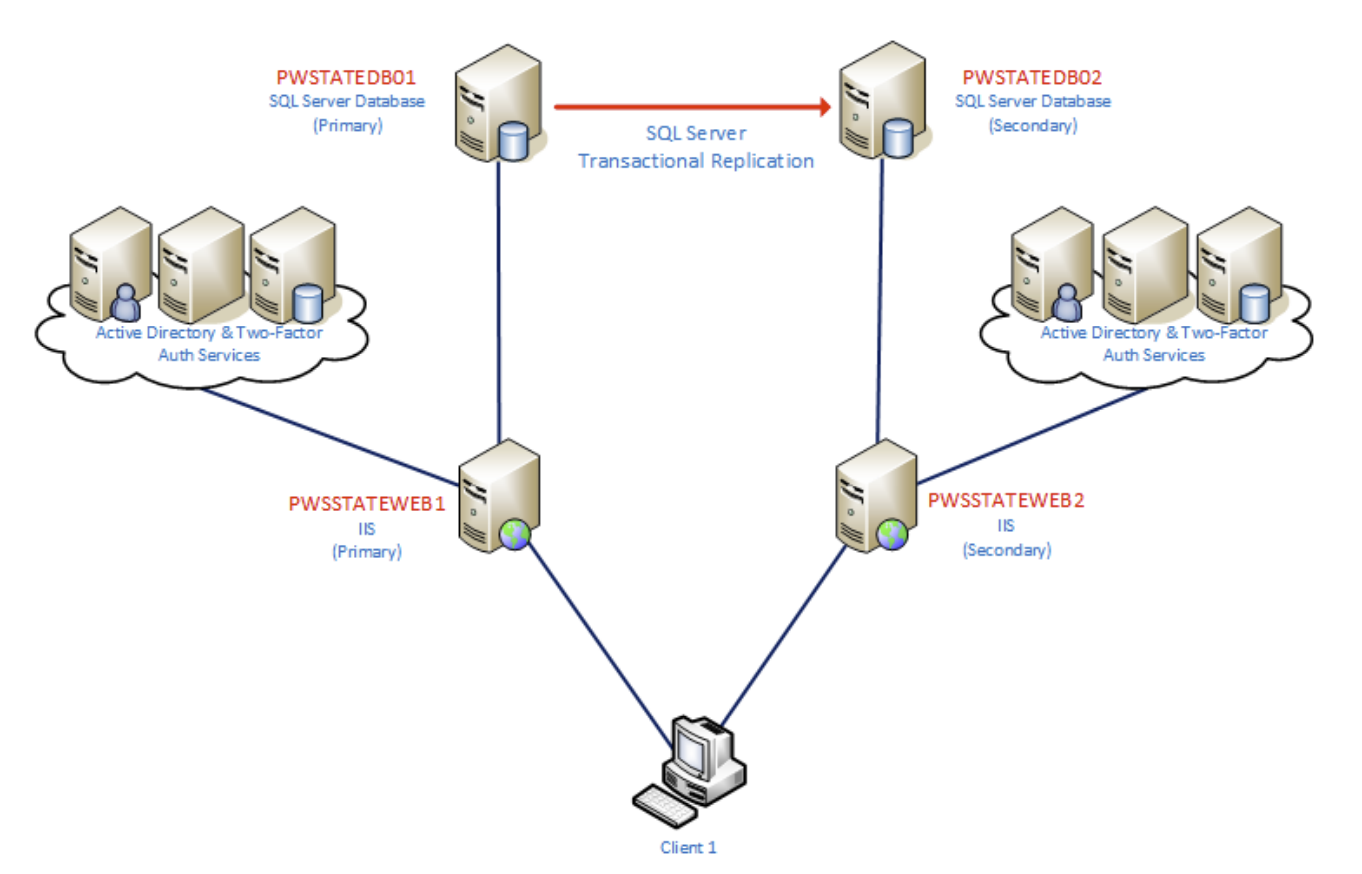
- Data is replicated in real-time, using SQL Server Transactional Replication
- The publisher of the replication needs to be SQL Server Standard or above
- The subscriber of the replication needs to be SQL Server Express or above
- Generally, you only ever access the primary web server, unless there is an extended outage, in which case you would need to point your browser to the URL of the HA server
- HA Server is read-only by default, but there are instructions provided to promote it to be the primary server if required
- There is no automatic fail over between the two web servers, as this requires a hardware appliance based load balancing solution to sit in front of the two web servers
- Below is an architectural diagram describing how the HA module works
A summary of the Active/Active design is:
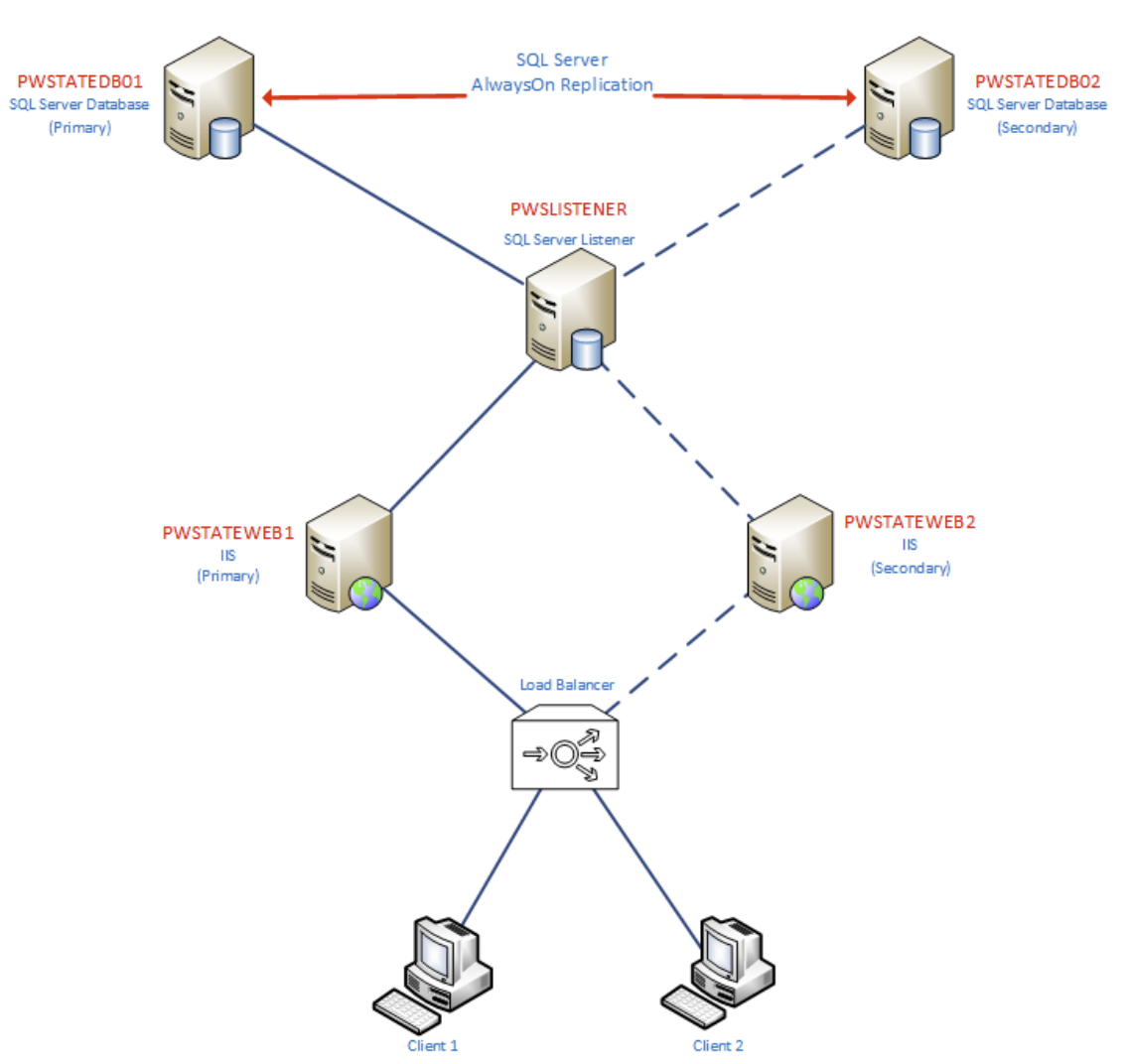
- As per the diagram below, this shows the use of a Load Balancer for web traffic
- The Load Balancer monitors the availability of the Passwordstate web servers, and automatically fails over if one cannot be communicated with
- SQL Server Basic Availability, and Always On High Availability Groups, are used to monitor availability of both SQL Servers, and perform automatic fail over in the event where one server becomes unavailable